
In May 2026, TasteAtlas released their updated global rankings for frozen desserts and iconic ice creams. Five Indian entries made the top 100. The food industry celebrated. They shouldn’t have stopped there.Five entries is not a victory. For a country with one of the most regionally diverse, culturally layered, and historically deep frozen dessert traditions on the planet — five is a sign of how little of India’s food culture has been converted into a global digital narrative.
This piece breaks down who made the list, why they made it, what TasteAtlas actually measures (and doesn’t), and what the global ice cream trend landscape looks like for Indian food founders and creatives right now.What Is TasteAtlas and How Reliable Is Its Ice Cream Ranking?
TasteAtlas is a Croatian-based food atlas platform founded in 2015 by journalist Matija Babić. It launched publicly in 2018 and has catalogued over 11,000 traditional dishes, 7,000 local ingredients, and 20,000 restaurants globally. It runs annual rankings across categories including frozen desserts, cuisines, and food cities.
How the ranking works: TasteAtlas rankings are based on crowd-sourced user votes, filtered by an AI system designed to remove nationalist voting, bots, and low-quality raters. The 2025/2026 frozen dessert edition drew from over 590,000 valid ratings.
What it actually measures: The ranking reflects global digital advocacy — which foods have passionate, vocal online communities — not objective culinary quality. A dish ranks highly when diaspora communities, food bloggers, and international visitors rate it. This creates a structural bias: foods popular in Indian restaurants in London, New York, and Sydney are overrepresented. Regional Indian gems with no diaspora footprint are invisible.
Known controversies: France’s largest TV channel accused TasteAtlas of rigging its cheese rankings in favour of Italy. Malaysia placed 46th in world cuisine rankings, triggering national backlash. Indian food lovers have long contested specific entries — jaljeera on a worst-rated list being one high-profile example. The platform is not Michelin. It is a crowd-sourced travel-food guide with significant reach and structural limitations.
Verdict for the Indian food industry: Use TasteAtlas rankings as a PR and advocacy signal, not as market validation. A ranking here reflects storytelling reach, not product superiority.
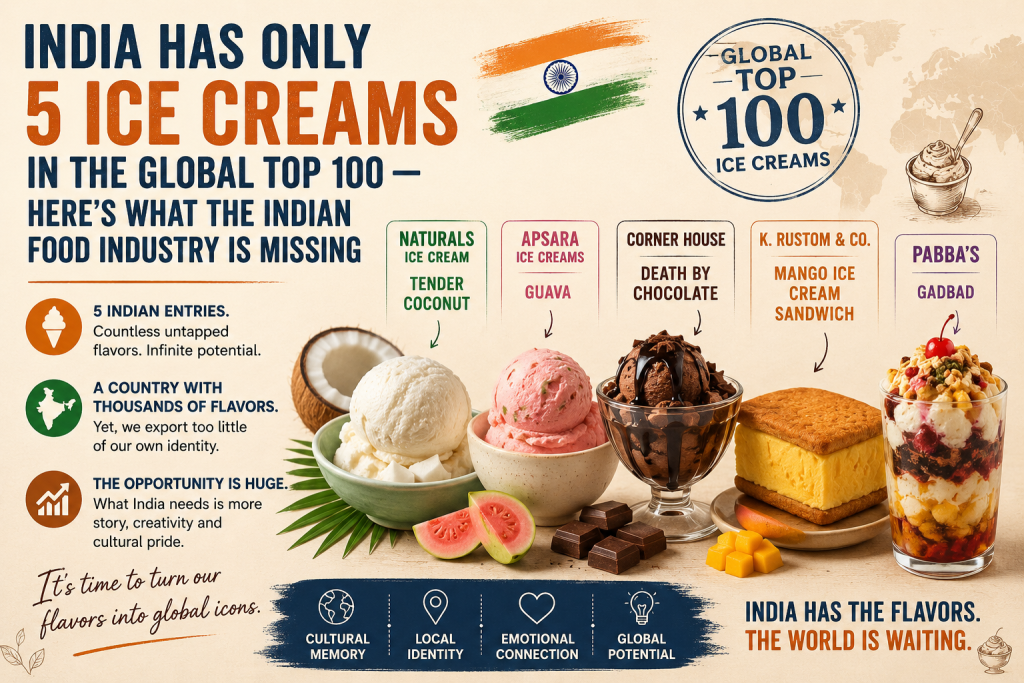
Which Indian Ice Creams Made the TasteAtlas Global Top 100 in 2026?Five Indian ice creams and frozen desserts were ranked among the world’s most iconic in the TasteAtlas 2025/2026 edition:
1. Mango Ice Cream Sandwich — K. Rustom & Co., Mumbai
Operating since 1953 out of Churchgate, Mumbai. The sandwich format, the density of the ice cream, and the complete absence of pretension are what built this into a multi-generational institution. Its ranking reflects decades of organic word-of-mouth amplified by food media coverage.
2. Tender Coconut Ice Cream — Naturals Ice Cream, Mumbai
Naturals built its reputation on a single product truth: the best ice cream tastes like the fruit it’s named after. No artificial flavours, a seasonal rotating menu, and real ingredients before “real ingredients” became a global marketing trend. This is a case study in authentic product positioning.
3. Guava Ice Cream — Apsara Ice Creams, Mumbai
Guava as a flavour is now a global trend — fruit-forward, tart, complex. Apsara has been making the case for Indian fruit flavours for decades. They were early. The world caught up.
4. Death By Chocolate — Corner House, Bengaluru
This is not an “Indian” flavour — it is a format and an experience. Corner House built a cult around texture, portion generosity, and the feeling that eating here is an event. The product insight is experiential, not ingredient-led.
5. Gadbad Ice Cream — Pabba’s, Mangaluru
The most underrecognised entry. Gadbad is a layered sundae — jelly, fruit, nuts, ice cream — that predates the global layered dessert trend by decades. Mangaluru was doing deconstructed dessert theatre before that term existed.
Why Indian Food Has a Storytelling Infrastructure Problem, Not a Quality Problem
Italy built the global narrative of gelato over 70 years. Regional provenance, specific pistachio sourcing from Bronte in Sicily, centuries of documented technique, protected designations of origin — the Italians made the world care about gelato as a category before they sold it as a product.
India has equivalent depth across every dimension:
- Regional provenance (kesar from Pampore, cashew from Konkan, coconut from Kerala)
- Centuries of documented technique (kulfi predates commercial ice cream by hundreds of years)
- Functional ingredients (turmeric, cardamom, saffron — all now globally trending in food)
- Unique texture profiles (the stretch of kulfi, the layers of gadbad, the density of mishti doi)
The gap is not product. The gap is the narrative machine. TasteAtlas specifically runs on user votes. The next version of this list is editable. The Indian food community — founders, creatives, diaspora — can shift it.
What Are the Biggest Global Ice Cream and Frozen Dessert Trends in 2026? The following trends are reshaping the global frozen dessert market and are directly relevant to Indian food founders:
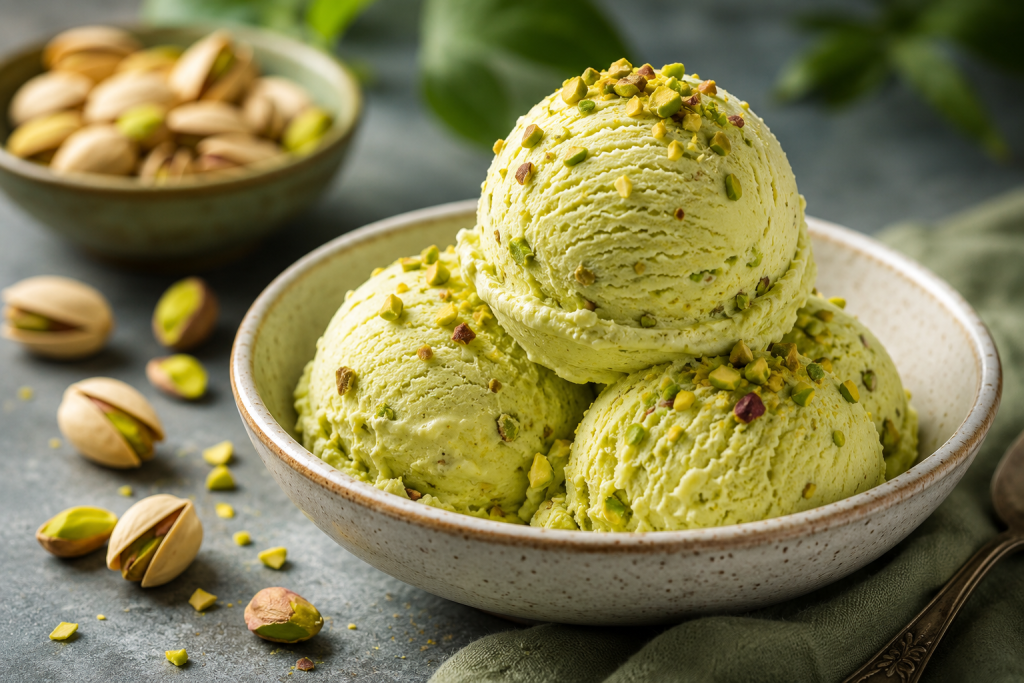
1. Pistachio as the Global Luxury Flavour Code
Sicilian pistachio, salted pistachio, and roasted pistachio are dominating global premium dessert menus. The underlying consumer signal: one specific, sourceable ingredient with clear provenance. Indian equivalents with equivalent positioning potential include cashew (Konkan), chironji, and saffron.
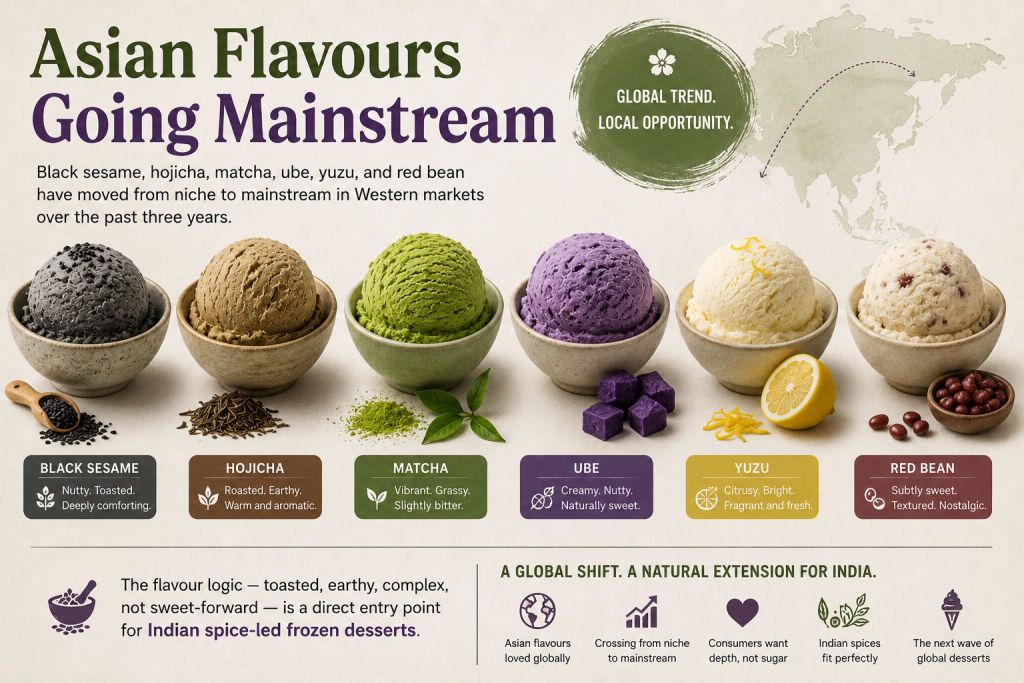
2. Asian Flavours Going Mainstream
Black sesame, hojicha, matcha, ube, yuzu, and red bean have moved from niche to mainstream in Western markets over the past three years. The flavour logic — toasted, earthy, complex, not sweet-forward — is a direct entry point for Indian spice-led frozen desserts.
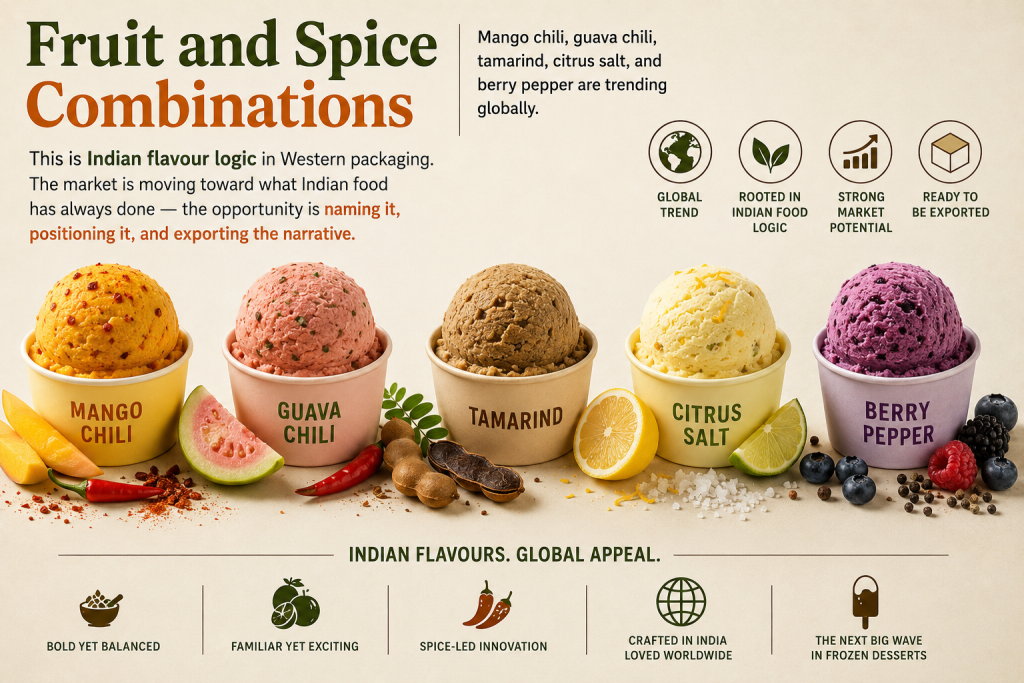
3. Fruit and Spice Combinations
Mango chili, guava chili, tamarind, citrus salt, and berry pepper are trending globally. This is Indian flavour logic in Western packaging. The market is moving toward what Indian food has always done — the opportunity is naming it, positioning it, and exporting the narrative.
4. Functional Ice Cream
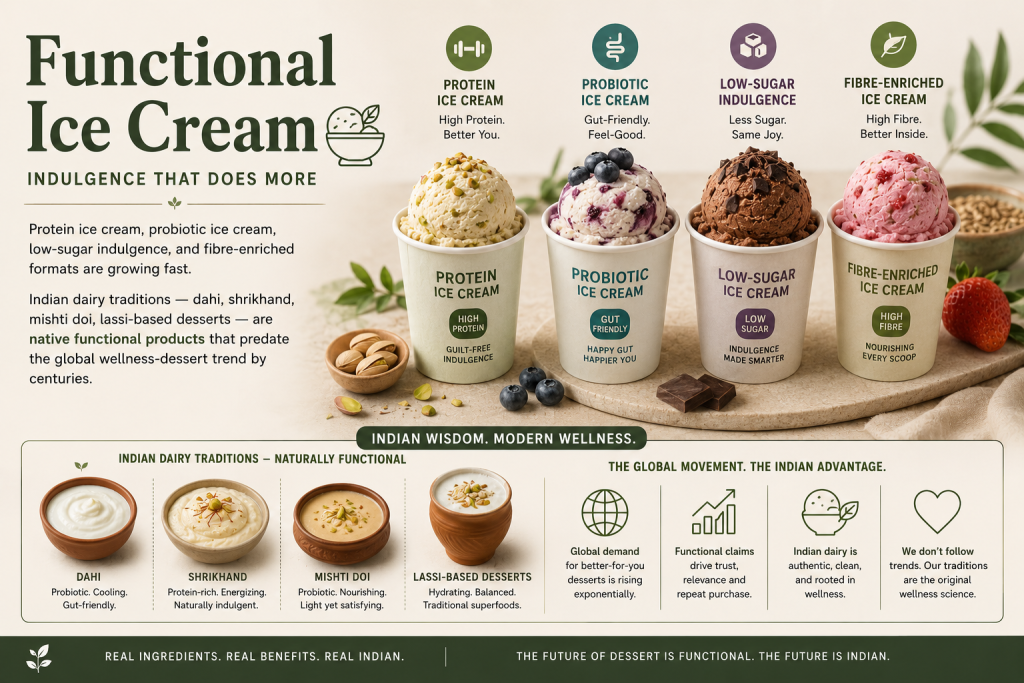
Protein ice cream, probiotic ice cream, low-sugar indulgence, and fibre-enriched formats are growing fast. Indian dairy traditions — dahi, shrikhand, mishti doi, lassi-based desserts — are native functional products that predate the global wellness-dessert trend by centuries.
5. Texture as a Differentiator
Consumers are increasingly choosing desserts based on texture: chewiness, stretch, crunch contrast, creaminess. Turkish Dondurma’s global rise is largely a texture story. Kulfi’s dense, slow-melt texture and gadbad’s layered architecture are directly competitive in this frame.
6. Cultural Authenticity Replacing Luxury Branding
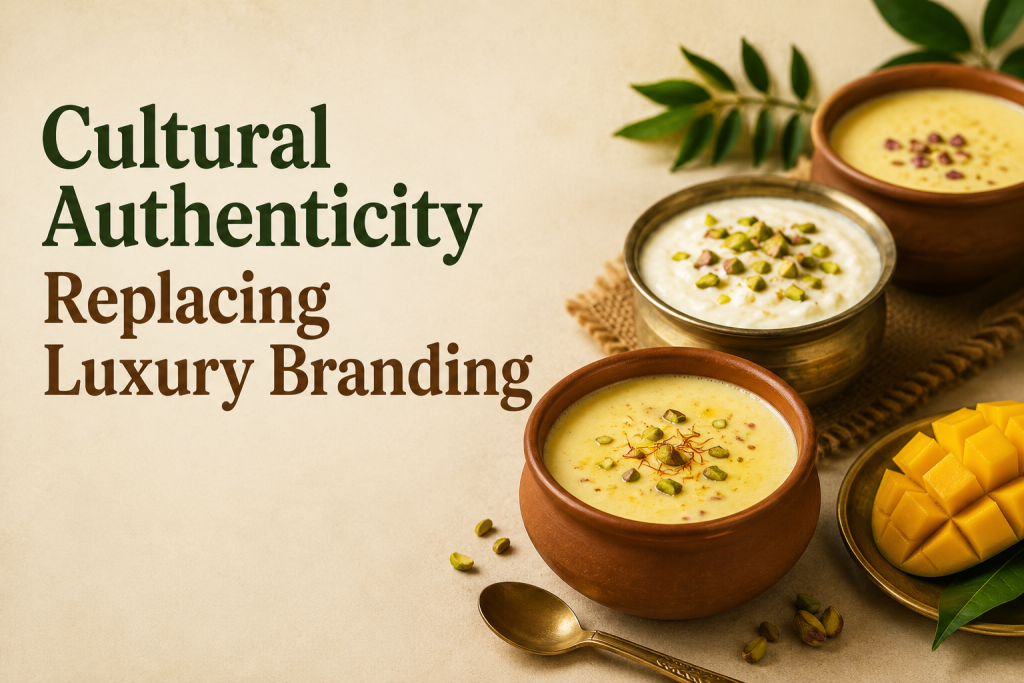
The single most important macro shift in global premium food: authenticity of origin is replacing brand prestige as the primary value driver. Consumers want the specific place, the real ingredient, the documented tradition — not a label. This is the most significant opening for Indian regional food in decades.
What Should the Indian Food Industry Do About This?
For food founders: Document the origin story of your product — ingredient source, regional technique, historical lineage. Build the digital trail: your website, your social content, your TasteAtlas listing. The world is actively searching for exactly this kind of provenance. You have it. Package it.
For food creatives: The global trend lines are pointing directly at Indian flavour logic. Make the connection explicit. “Guava chili is trending globally — we’ve been making it in Maharashtra for decades” is content. Write it. Post it. The category authority is yours to claim.
For food lovers and the diaspora: Rate your favourite regional Indian frozen desserts on TasteAtlas. Write three sentences about why they matter — their origin, their texture, their cultural context. A rating with a thoughtful description is the smallest possible act of cultural documentation. Do it for the kulfi cart. Do it for the mishti doi shop. Do it for the gola wala.
The TasteAtlas list is imperfect, biased, and crowd-sourced. It is also a live, global, editable conversation that millions of food-curious people use to decide what to seek out when they travel and what to search for online. India should be louder in it.
Five entries is a beginning. It should not be a ceiling.
https://2blissofbaking.com/maritozzi/