
Chocolate was a treasure back then, it was used as a currency. One could buy a rabbit for 30 nibs for cocoa beans. Chocolate was consumed as a drink, but mostly by the elite. The nibs from the cacao plant were ground into a paste and were consumed as a drink, unlike our chocolate bars today.
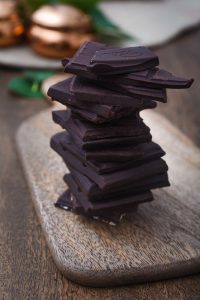
Chocolate’s 4,000-year history began in ancient Mesoamerica, present-day Mexico. It’s here that the first cacao plants were found.
The Olmecs were one of the earliest civilisations who turned the cacao plant into chocolate. They lived in around 1000 BC, in the tropical lowlands on the Gulf of Mexico in the present-day Mexican states of Veracruz and Tabasco. Their word, “kakawa,” gave us our word “cacao.”
The Mayans, who inhabited the same area a thousand years later (from about 250-900 AD), used chocolate. It is with the Mayan that chocolate history really begins. They had cacao GOD. According to Mayan belief, cacao was discovered by the Mayan gods within a mythical mountain and was given to the Maya by the God Hunahpú.
The cacao beans were used as currency, and were also used for religious rituals; it sometimes took the place of blood. Mayans had their chocolate as a drink. Chocolate history doesn’t include solid chocolate until the 1800s. Daynmerry Natural Roasted Cocoa Nibs, 250 g
The interesting fact is that, Mayans prepared the chocolate same way, it’s prepared today. First, the beans were harvested, fermented, and dried. The beans were then roasted and the shells removed and then were ground into a paste. The paste was mixed with hot water and spices, such as chilli, vanilla, annatto, allspice, honey, and flowers. Then the mixture was frothed by pouring it back and forth between two containers. The rich enjoyed drinking their chocolate from elaborately painted chocolate vessels. Emperors were buried with jars of chocolate at their side.
All About Hot Chocolate
VALLEYSPICE – Pure and Natural Cocoa Beans / Nibs / Granulas Whole from Kerala, 200g
Aztecs conquered the Maya, and they kept the chocolate tradition alive. From about 1200-1500, the Aztecs dominated the region and continued using cacao as currency. The Aztec drank their chocolate much like the Maya, although they prefer it cold.
One chocolate history legend has it that the Aztec god Quetzalcoatl brought cacao to earth and was cast out of paradise for giving it to man. It was believed that only the gods were fit to drink chocolate!
Etymologists trace the origin of the word “chocolate” to the Aztec word “xocoatl,” which referred to a bitter drink brewed from cacao beans. The Latin name for the cacao tree, Theobroma cacao, means “food of the gods.”
Both the Mayans and Aztecs believed the cacao bean had magical, or even divine, properties, suitable for use in the most sacred rituals of birth, marriage and death.
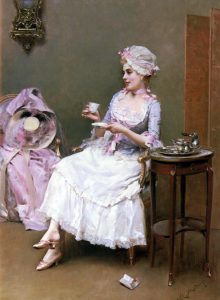
Chocolate entered Spain – Aztec king Montezuma welcomed the Spanish explorer Hernán Cortés with a banquet that included drinking chocolate, having tragically mistaken him for a reincarnated deity instead of a conquering invader. Chocolate didn’t suit the foreigners’ tastebuds at first –one described it in his writings as “a bitter drink for pigs” – but once mixed with honey or cane sugar, it quickly became popular throughout Spain. Hernán Cortés brought chocolate to his homeland in 1528. Chocolate quickly became popular among the rich and wealthy. Even Catholic monks loved chocolate and drank it to aid religious practices.
Doctors prescribed it for curing fevers, cooling the body, aiding in digestion, and alleviating pain. The Spanish kept chocolate quiet for a very long time. It was nearly a century before the treat reached neighbouring France, and then the rest of Europe.
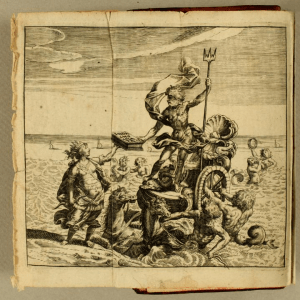
Chocolate then made its way to the rest of Europe. It was a big hit in Louis XIV’s court. As the Spanish royalty intermarried with other European Royalty, cocoa was given as a dowry.
In 1643, when the Spanish Princess Maria Theresa (1638-1683) was betrothed to Louis XIV (1638–1715) of France, she gave her fiancé engagement gift of chocolate, packaged in an elegantly ornate chest. A royal chocolate maker was appointed and chocolate drinking became the rage.
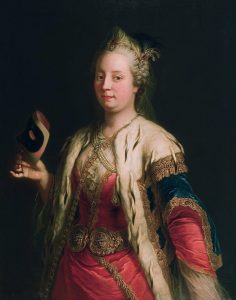
In 1657, the first chocolate house opened in London. By the 17th century, chocolate was a fashionable drink throughout Europe, believed to have nutritious, medicinal and even aphrodisiac properties But it remained largely a privilege of the rich until the invention of the steam engine made mass production possible in the late 1700s.
Coenraad Johannes van Houten
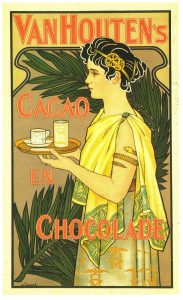
In 1828, a Dutch chemist Coenraad Johannes van Houten found a way to make powdered chocolate by removing about half the natural fat (cacao butter) from chocolate liquor, pulverizing what remained and treating the mixture with alkaline salts to cut the bitter taste. His product became known as “Dutch cocoa,” and it soon led to the creation of solid chocolate.
The creation of the first modern chocolate bar is credited to Joseph Fry, who in 1847 discovered that he could make a moldable chocolate paste by adding melted cacao butter back into Dutch cocoa.
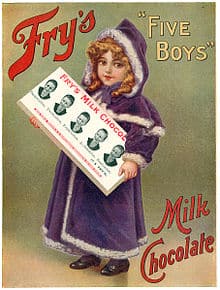
By 1868, a little company called Cadbury was marketing boxes of chocolate candies in England.
In 1875, Daniel Peter and Henri Nestle added condensed milk to solid chocolate, creating a milk chocolate bar. And Nestle became a hit in the market.
In 1879, Swiss chap Rudolphe Lindt invented the conch, the machine that rotated and mixed chocolate to a perfectly smooth consistency.
By 1907, Milton Hershey’s factory was spitting out 33 million kisses per day.
All About Hot Chocolate
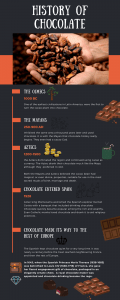
Here is an infographic to understand the chocolate journey
3d Creations 6 Cups Aluminum South Indian Filter Degree Coffee Machine (Black)